Showing posts with label EDS. Show all posts

Thursday, June 13, 2013

Digital Signs Need to Know- Is Anything Really ‘Made’ in the USA?

 - Mike Prongue

Can China compete with American manufacturing?  This legitimate question was raised a couple years ago in a Time Magazine article with the same title, by Michael Schuman (STORY) and I invite you to read it.

You may think of American manufacturing as simply rolling up into a “small ball of pity” and getting kicked around some dusty and abandoned factory floor somewhere in Ohio, by a team of aggressive Chinese workers. That is not true. China may be in the lead with total dollars output but that is not so surprising.

Markets are efficient and seek out the least expensive path, the path with the highest utility, to produce goods. Every country, including Japan and South Korea, has ridden the predictable economic life-cycle starting as an “infant” with only cheap labor, making simple products, to a maturing, high-tech, high-value, manufacturing adult. The USA has been a sophisticated manufacturing adult for over 50 years.  We design, engineer, assemble, QC check, evolve and market some of the most complex products and systems known to man. From sophisticated medical devices such as MRI systems, to devastating and futuristic weapons of war, to Boeing’s Dreamliner 787 jet airliner, the USA has the technology and capability that China can only lust after at this point.

The question this post asks is “anything really made in the USA”? The answer is sure- we make natural gas, oil, and iron ores as mining output.  Those items are made entirely in the USA as they have been dug up from American soil. There are also many other items, usually simple items that are totally made in the USA (although we can debate where the steel may have originated).

What about products that are comprised of multiple complex sub-components? What about Dell and HP, and Chrysler and Ford and GM and Apple… all icons of American manufacturing?  Do they “make” American products?

Some people say “yes, of course” while others say “no way”.

How can GM profess to have cars "made in the USA" when so many sub-components are made elsewhere in the world? How about Japan? Are Toyota and Honda American manufacturers too then, since they assemble so many cars here? Last look, Toyota Camry and Ford F-150 shared the top spots in the USA with Honda Accord taking the 3rd spot for cars built in the USA (CARS). Well, are they taking the prize as the top American manufacturing  or not? Does anyone know anymore?

Does anyone care?

Here is what you need to concern yourself with:

  •  American Designed and Engineered Who controls the drafting, design, engineering and quality expectations of the product? This is the most important part of the equation. Many times, an international component is used because there is no better product available. Certain sub-components may already be well-engineered and designed, but can be enhanced further with a beefed-up capacitor or a more sophisticated voltage regulator. This is where the “American designed and engineered” stamp determines the ultimate reliability of the product.
  •   Manufacturing in the USA or controlled by USA quality teams If it’s not actually created  by American hands on American soil then it had better be produced in a foreign factory owned and managed by the American company. If the factory is not owned by the American company then having on-site quality control engineers present during manufacturing runs is essential. You get what you inspect, not what you expect.
  •  Assembled in the USA If the well-engineered, USA designed sub-components are manufactured in a high quality environment, regardless of where the factory is located, integrated with other systems created and made in the USA, then assembled by American workers, this is a win-win. You’ll find that the proud USA airline manufacturer, Boeing, uses over 45 companies to produce its new 787 Dreamliner jet airliner. But it is assembled in the USA!
  • Backed by USA warranty Okay, so now we have a high-quality system, designed to specification, engineered by experts, manufactured to exacting standards (somewhere), delivered to the assembly plant just-in-time, and integrated into the final structure. If it breaks and there is no rock-solid warranty behind it, it does not matter if it was made in front of the Lincoln Memorial or in a rice paddy in Vietnam. Having the surety of a warranty, preferably a 3rd party warranty, one that transcends the manufacturer’s promise is a huge benefit!
  • Supported by USA technicians and qualified  support people Having a product that can be supported by qualified USA technicians with “boots on the ground”; service conversations with qualified people who can support in the English language (and others); comprehensive product documentation that is not optional. Any manufacturer who wants to be taken seriously will have these available to customers.

It is a global business world. Do not be misled into thinking that any LED Sign company has a 100 percent horizontal manufacturing process where iron ore, trees (for paper), electronic components and screws are fed into the back door of the factory and a perfectly assembled LED sign comes rolling out the front. It just "don't work like that!"

Stuff comes from everywhere, made by everyone- doesn’t matter if it’s an LED sign or a Boeing 787 Dreamliner. You just have to do your homework and research the company, talk to their people, see their product in the field, and interview a few customers. 

The truth always comes to light. Just make sure it does BEFORE you invest in an LED sign.

These comments belong to me, Mike Prongue, and do not reflect the views, opinions, hopes or dreams of anyone else, anywhere else and this includes Vantage LED. I appreciate your constructive opinion which may be sent to me at michael@vantageled.com.   

Thursday, February 14, 2013

Digital Signage Safety- Statistical Analysis of the Relationship between On-Premise Digital Signage and Traffic Safety


- Mike Prongue

I live, work and play on Florida’s Gulf Coast in the Gulf Breeze and Destin area. Not only are we blessed with great weather, and a great quality of life but we continue to experience these despite an abundance of LED signs. 

The world has not ended, dogs are not sleeping with cats, and we have not turned into “Tokyo at Night” or “Sin City”.  Life is better with attractive digital signs and colorful content rather than unreadable and dated old-school static displays and reader boards with missing letters.

Dentist offices have them. Insurance companies have them. Destin, FL a regional tourist destination has an abundance of LED signs on hotels, restaurants and water parks. Schools and churches have them as the rule and not the exception.

We have areas here where they are closely regulated- historical districts and scenic areas. But the acceptance of the LED sign in NW Florida is amazingly leading edge. Compare this LED-liberal mindset to Miami, FL (for example) and we seem to be light-years ahead.

Once concern that impacts the community’s acceptance of on-premise LED signs is- does LED signs impact traffic safety? Many a permit has been denied or a restrictive sign ordinance written by well-intentioned elected official because of this unfounded fear.

A post to the International Sign Association’s Facebook page, dated, January 9th, 2013, reads:
***
The first-ever research on how on-premise electronic signs (EMCs) impact traffic safety has been officially released! It confirms what we all already knew – that EMCs DON'T cause traffic accidents.

Great thanks to Texas A&M University and the Signage Foundation, Inc. for conducting this groundbreaking and valuable research. We’re already using it to educate local officials all over the country in order to help draft reasonable and beneficial sign codes.

See the research here:

http://www.thesignagefoundation.org/LinkClick.aspx?fileticket=oTRY407QzDU%3D&tabid=59 mid=501

***

Two previous LED sign industry safety research studies were completed in the last 12 years- one in 2001 and the second in 2009 with the results and conclusions somewhat disputed due to statistical methods and assumptions made within each study. This Texas A&M study report describes the flaws and limitations of the earlier studies if you are interested.

This new report is dated December  17, 2012 so it is contemporary, but it’s  also statistically vetted and draws positive conclusions.
The 41-page report boils down to the one line we all care about on page 35:

“Based on the analysis performed for this research effort, the authors are able to conclude that there is no statistically significant evidence that the installation of on-premise signs at the locations evaluated in this research led to an increase in crashes.”

I invite you to read the study, promote the study, and include this study in your arsenal to diffuse the fear and old-school mindsets that still limit the growth of our industry in some communities.

Happy Valentine’s Day- stay out of the candy!


These comments are humbly submitted by me, Mike Prongue, and do not reflect the views, opinions, hopes or dreams of anyone else, anywhere else and this includes Vantage LED. I appreciate your constructive opinion which may be sent to me at michael@vantageled.com.

Thursday, January 17, 2013

LED Sign Tech & Spec: Power Supplies


-Deacon Wardlow
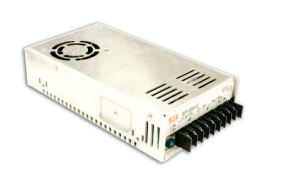
Power supplies are the beating heart of an outdoor LED system. I wrote a brief article on this topic previously  covering some scenarios on off-the-shelf product vs custom specified components. This article is specifically taking a look at the heart which pumps power through a system.

Power supplies primarily serve the purpose of AC to DC conversion and power flow control. In a PC, the power supply runs proper levels of power to different components in the system. In an LED system, the power supply takes 120V (or 240V) AC service and converts it to DC for the control components and LEDs to use. As little as 8 years ago, power supplies were built with this primary purpose in mind and had little-to-no safeties built into the system.

Current (quality) power supplies have several control factors and you should know what they are and how they work. If the manufacturer you're working with can't say their power supplies handle ALL of the features mentioned, you should be concerned as these are standard feature sets. Make them prove it...

Here are the standard features and what they mean:


SMPS Universal AC input / Full range
In a SMPS (switched-mode power supply) AC input is directly rectified and filtered to obtain DC voltage. Switched-mode power supplies are regulated to keep the output voltage constant. These employ a controller which monitors current drawn by the load. As power output requirement increases, the duty cycle increases thus ensuring the system has the power it requires.

Built-in active PFC function
Power Factor Correction (PFC). This is a somewhat complex system which could take pages to explain. Simply put active power factor correction consists of a number of capacitors which are switched by means of contactors. These contactors are controlled by a regulator that measures power factor in an electrical network. Depending on the load and power factor of the network, the power factor controller will switch the necessary blocks of capacitors in steps to make sure the power factor stays above a selected value. This keeps everything in the system even and regulates the power going through to the system, alleviating spikes/drops in power which could shorten the lifespan of your display.

Protections against Short circuit / Overload / Over voltage / Over temperature
Quality Power supplies often include safety features such as current limiting which protect the device from harm. In the event an abnormal high-current power draw is detected, the power supply recognizes this as a direct short and will shut itself down before damage is done. The same goes for excessive heat levels (which directly affect performance).

Forced air cooling by built-in DC Fan
Many power supplies are built with passive thermal management (perforated aluminum casing). Unfortunately this only serves low-end power systems. An LED display often requires significant power and can create high levels of heat (BTUs - British Thermal Units) which need to be mitigated within the system. 

Built-in fan speed control
Simply having a forced air cooling system isn't enough. The fans need to be managed with controls set to run at varying required speeds (from ) - 100%) when thermal sensors detect levels above a given threshold.  This ensures the system continues to operate optimally. As heat increases, a power supplies efficiency decreases and its output drops. Keeping the power supplies cool is incredibly important to ensuring the system performs at its best.

Fixed switching frequency at 100KHz
Resulting DC voltage is switched on and off at a high frequency by electronic switching circuitry.This produces an AC current which passes through a transformer or inductor. High frequency switching enables the use of  filter capacitors that are much smaller, lighter, and less expensive than pass-through systems (systems which use control chips to filter/convert power). After the inductor , the high frequency AC is rectified and filtered to produce the DC output voltage. If the SMPS uses an adequately insulated high-frequency transformer, the output will be electrically isolated from the mains; this feature is often essential for safety.

While this is a little drier than the regular articles posted, it's important to understand the heart of LED Display systems. A lot of manufacturers cut corners with the power supplies and they're hoping buyers won't know the difference. These seem like small, unimportant things (a power supply is a power supply, right?) but they have significant importance to the overall  lifetime optimal performance of your display. The more you know, the better you can source the best solution for your company and clients.

*I invite you to comment here and/or email me directly with requests at deacon@vantageled.com. Vantage LED has white paper resources and more educational material on the website (http://www.vantageled.com), please check it out when you have a moment. Note all posts/thoughts/writings are strictly the viewpoint of me and me alone and do not reflect nor speak for Vantage LED’s beliefs, attitudes, thoughts, etc. unless specifically stated.

Thursday, January 10, 2013

Digital Signage Sales 101: Sticker Shock Syndrome; dealing with cost objections

-Deacon Wardlow

     The discussion went well. The client's needs were discussed, a proposal was put together outlining the value of the solution, discussing how the solution fit the customer's needs and the various options available. When you get to the cost, you get "the face." Maybe not, maybe you get objections or surprise or (the worst) complete and utter silence.

When a customer gives you the same look as the baby in the picture to your left, things are not going well. Overcoming sticker-shock is an issue in any industry. I feel somewhat safe in saying we've all likely been there at one time or another. Today's blog, some ideas on overcoming (and completely avoiding) Sticker Shock Syndrome.

1. Budget
     Discussing budget is separate from price. If you were selling real estate, you'd want to know what price range the buyer is looking at so you don't waste their time (and they don't spend yours) on options they won't really consider. You could work with ranges. Are they looking for something which falls between $30,000 - $50,000? $35,000-$20,000? $20,000-$10,000? Don't dig for specifics, but if you have a range, this gives you something to work with. At least that's what many believe.

What you've just done though is start the wheels in motion and potentially built up concern and stress on the buyer's end. You just gave them a bunch of numbers which (to many) are rather expensive and there's no justification for the cost, no value. Just a bunch of high numbers. Many salespeople skip over a budget consideration and discuss the solution itself (which I recommend wholeheartedly). With Digital Signage (specifically LED Signs) you'll get an idea of what the client is looking for; then it's a matter of giving a few pricing options (good, better, best) and building the value of the proposal.

2. Build Value
     How was the proposal submitted? Did you hand the customer a folder with some system information, a job print and the price? Did you give them a single piece of paper with the cost in the corner? Did you shake their hand, look them in the eye, and say, "$$$$$$$$$$$$! Will get you what you need."? Don't give them a map and tell them where you want them to go, walk them through the proposal so everyone arrives at the same time.

I like folders (though there are several options which achieve the same end). Get as many folders as there will be people in the meeting and one "extra" for yourself or a surprise added member to the meeting (ideally something branded with your company logo/contact info). Hold on to anything you're going to hand out.

Part 1: Your company and why XYZ Company is the best for this solution (1 page, images of similar installations/work on that page).
Part 2: Why the solution is a great fit for their business (case study/best-use example, etc.) 1 page.
Part 3: The solution. 1 page for the hardware, 1 page for the software. Keep it short. Keep it simple.
Part 4: The implementation. 1 page, how long will everything take from order to installation and when can they use the system.
Part 5: What they're getting, a breakdown of costs associated and the final price.

Hand them each part as you discuss it. This helps keep everyone on the same page and paying attention to your presentation. Build the value in the system and how the solution will help them achieve their objectives (demonstrate how this will be a return on the investment vs. a purchase, discuss how the DS solution can achieve better outreach to customers and the community). By the time you reach the actual cost, there should be inherent value built into the pricing. The customer will see how the system either uses expenses (advertising money allotted from alternatives which aren't working well) or how it generates enough traffic to support the price (increased revenue or better outreach outweighs the initial investment in the system).

Overall, the best way to overcome Sticker Shock Syndrome is to avoid it completely by being pro-active. If there's true value in the solution you're providing the customer and you've outlined how they'll benefit, the initial cost is justified and then it's a question of not if, but when they'll move forward.

*I invite you to comment here and/or email me directly with requests at deacon@vantageled.com. Vantage LED has white paper resources and more educational material on the website (http://www.vantageled.com), please check it out when you have a moment. Note all posts/thoughts/writings are strictly the viewpoint of me and me alone and do not reflect nor speak for Vantage LED’s beliefs, attitudes, thoughts, etc. unless specifically stated.

Thursday, December 20, 2012

Simple LED Sign Repair

“Anything that can possibly go wrong, does, usually at the worst possible time.”

-         Murphy’s Law


Rocket scientists at NASA believe this as gospel while others dismiss it as extraneous folklore.  But what if it is true? It sure seems like events conspire to ensure that “no good deed goes unpunished!”

Combine the hyped-up and misconstrued prediction by the Mayans regarding the end of the world this month with Murphy’s Law and imagine this scenario:

Your toy store, “Santa’s Toy Wonderland”, is running the biggest sale of the year this Friday, December 21st, 2012 and last night your team unloaded a tractor-trailer full of hot toys that every parent in town is desperately searching for. You have toys ranging from battery-powered fire engines that kids can race up and down the sidewalk on to the latest Wii console.  Santa himself would be impressed!

Your graphic designers just uploaded the new animation for your two-sided, full-color, 10’ x 6’, LED sign. Last night you tested the content, and it “popped!” It looked great and now, right now, you just arrived in the parking lot at 5AM on Friday morning and there is no image on the LED sign.

What do you do? What can you do? Can you do anything? Well, if you’re the owner of the LED display you can call the owner of the sign company who sold you the LED sign and wake him up at 5AM and tell him you are declaring an “LED Emergency”- perhaps the first ever in the LED sign industry.

Here are a few simple things that the sign company owner knows to make his problem solving easier:

  • The controlling software and hardware engineering is pretty impressive but the actual problem troubleshooting is fairly straightforward.

  • Almost all problems are either: A/C power source, computer on/off, cables, power supplies, or controller cards (of some type depending on brand and model).

  • LED signs are a matrix of lamps that comprise modules, a matrix of modules that comprise cabinets and a matrix of cabinets that make up the complete LED sign.

Knowing this, do not panic, even if you are the rookie LED sign repair technician- stay calm!

Is the entire LED sign off? Quality LED signs incorporate a controlling computer that must stay on constantly to “talk” to the LED sign. Is it on? Perhaps an evil elf in your shipping department turned your LED sign off last night, to give you a heart attack at this very moment! Check the main power switch. If it’s off, turn it on and see if the LED sign comes back on. Also, make sure the sign itself has not tripped a circuit breaker (or multiple circuit breakers depending on how it is wired). If one side is off and one side is on, it’s possible that an individual circuit breaker may control each side of the LED sign and only one breaker has tripped.

Does one side of the LED display appear “on” and the other side “off” with no condition described thus far present? Could be that a data controller (one unique data controller per side) is bad, or the cable sending data from the card is bad.

Do you have only a block of multiple LED modules out on one side? If so, a power supply which feeds a group of these LED modules may have failed.

Or, do you have just a row of LED modules that are off or that share a common lighting problem? If so you may have a bad LED module at the first feed point for that row. An IC chip could be bad on that first LED module.

Some troubleshooting strategies that your licensed LED sign technician will employ to narrow the problem search down include checking cables and connections, swapping LED modules and replacing damaged components. They will be careful and safe, and will always use their safety harness when working high.

But as a toy store owner, what can you do? If you are not a skilled technician getting involved in the actual repair can be costly and dangerous. Do what you can without getting hurt or making it worse:

·         Check your content scheduler. Has your ad expired? Perhaps it was scheduled to run just one day. If your scheduler doesn’t show current ads, expired ads, and ads currently playing you are missing out on a great feature! 

·         As previously stated, check for physical power interruptions to the LED display and also ensure that the software has not dimmed your display to zero nits. The LED display can be on but dimmed down to zero brightness.

·         Make that call to the installing sign company. During peak business times every hour that LED display is down is lost sales revenue. Call them right now.

Quality LED signs have surge suppression engineered into the product. If not, surge suppression should be added to the building’s electrical system. What this does is to “bleed off:” excessive voltage and current. Usually the culprit that damages sensitive electronics is over-current. When the power goes off and then comes back on, the voltage is low, and because Ohm’s law insists, the current is high. High current can damage electronics if a surge suppressor is not incorporated into the installation.

With LED signs, as with all electronics, lightning can be devastating. This is why every sign must be grounded to an earth ground (copper stake driven 6 feet into the ground). This may cause the lightning to follow the path of least resistance to the earth. Maybe this saves the LED display, maybe it does not.

Every LED display needs to be covered under the general liability insurance policy of the business to avoid catastrophic scenarios like fire and lightning.

Hopefully you, working with your local sign company and a supportive US manufacturer can get the LED sign back up and running to cause a stampede through your front door by noon! Not all sign companies are alike and not all signs are alike. Some seem to demand constant repair attention, while others run for years without service issues. Do your homework before buying and select wisely to make your purchase an “investment” rather than a “basket on the top of a pole” that you throw dollars into.

Remember that Murphy’s Law is a myth and the Mayan’s were speaking of the old calendar running out of pages. I hope.

Merry Christmas!


- Mike Prongue (with technical assistance from James Anderson)


**All posts, thoughts and writings are strictly the viewpoint of me and me alone and do not reflect nor speak for Vantage LED’s beliefs, attitudes, thoughts, etc. unless specifically stated.


Thursday, December 6, 2012

Is an EMC (LED Sign) an investment or a purchase?

-Deacon Wardlow
Money talks, but who’s listening? It’s difficult to decide where advertising dollars should go. Newspaper readership is at all time lows, people listen to satellite radio or their MP3 players, flyers are picked up by the wind more than by potential customers and the internet grows so rapidly it’s hard to tell if you can make any headway. Where is the money best placed for the greater return.

I was speaking with a friend of mine about Digital Signage Solutions for advertising within a business or organization. The conversation basically boiled down to, “Is it a purchase or is it an investment?” He was looking at Digital Signage as a purchase. A one-time cost to his business and I disagreed. A flat screen for the home may be considered a purchase; after all, what value does the TV add? The TV is a portal for entertainment, education and actually brings a lot of value to the household, in this case it can be seen as an investment in oneself (or one's family). Digital Signage (LED Sign, LCD, etc.) is an investment. The initial cost is one small component in the greater picture against the overall value it brings to an organization.

Digital Signage (DS) requires time and effort to work. Someone using DS doesn’t just put up their displays and a couple of messages and expect people to come breaking the doors down. DS is a communication to the community, to the competition, to your potential customer base. DS is DYNAMIC and should change, be fresh, offer a perspective and information which is new to the target viewer.

Like any good investment, the foundation has to be solid to show long-term performance. Buy low, sell high doesn’t work here. DS is one of the few areas where you often get what you pay for and you don’t want to “go cheap” on a solution for your business as it won’t pay out well for you in the end. There's a big difference between a "cheap" DS solution and a competitively priced one. Whatever you end up getting, the investment is made with some kind of return expected.

You get out what you put in. The better the content, the message and the look of your DS solution, the more the target viewer will be inclined to interact (whether that means stop in the store, email, twitter, facebook, or whatever your call to action is). The investment will net you a return. The return could be an ROI (Return On Investment) or perhaps your focus is ROO (Return On Objective, such as getting the community to interact more or take part in their town/city/school/church).

After arguing my side, I asked him, "Is Digital Signage a purchase?" He agreed with me and redifined his view of a purchase as a one-off item (or service/whatever) which, while it contains value to you and a few others, does not inherently gain you a return on anything other than the pleasure of ownership. An investment in DS will help you grow your organization and will be a key element in your success. Make sure your investment is a sound one and compare what’s out there. When you shake the apple tree for a comparison, you might be surprised to see a few lemons drop. I hope the blog helps you spot the lemons and avoid the frustrations.

*I invite you to comment here and/or email me directly with requests at deacon@vantageled.com. Vantage LED has white paper resources and more educational material on the website (http://www.vantageled.com), please check it out when you have a moment. Note all posts/thoughts/writings are strictly the viewpoint of me and me alone and do not reflect nor speak for Vantage LED’s beliefs, attitudes, thoughts, etc. unless specifically stated.