Showing posts with label Power. Show all posts

Thursday, April 4, 2013

LED Sign Tech & Spec: Check The Power! Electrical Supply and Outdoor Digital Signage


-Scott Hofheins


Is the sign getting the correct power? This is one of the first questions I ask when an LED sign is exhibiting strange or seemingly random issues that normal troubleshooting cannot solve. Nine times out of ten the power is found to be the root cause. Unfortunately (in the past) I had to learn this the hard way, spending hours working on solutions that ultimately would fail due to bad power. This can be extremely frustrating for both the end user and the technician.


I hope to help save some time and effort for people with these issues by providing some common power issues that I've seen occur, and ways to recognize and avoid them altogether. We won’t go to in depth about how power works in general, but my earlier post about voltage and amperage, and Deacon’s post on “the silent killer” have additional information on this topic..

To start with, I have found it’s always good to verify the power immediately in the following situations:
  • If the sign is at a special event using portable power, like 208 VAC.  
  • If the sign is using a generator for power.
  • If the sign is blank, and you cannot communicate to it.
  • If the issues on the sign don’t “make sense” after normal troubleshooting procedures.
  • If the sign is on multiple circuits, and only certain sections of the sign are blank, corresponding to the circuits.
Voltage Drop
Any electrical installation Must take voltage drop into account. Electricity travels through wires (conductors) that have a certain amount of resistance. As the length of the wire increases, the Voltage will decrease. This will cause the sign to be under-powered, and will cause issues with the power supplies and internal components.

Indicators:
  • Long distances between sign, and the main source of power.
  • Sign or sign components reboot at seemingly random times.
  • Components work for a certain amount of time, but repeatedly fail.

System Voltage
Electrical devices are configured to work on certain voltage ranges and phases. Most devices in the US work on either 120 Volts or 230 Volts. Although devices can operate within a 10% range either way (ie 115 Volts or 220 Volts), they must stay within that tolerance or damage will occur. In most cases you cannot run an LED sign on 230 Volts that is setup for 120 Volts without major damage to the components and complete failure of the sign.

Indicators:
  • Sign powers on, but runs erratically.
  • Sign will not boot up after power on.
  • Issues with sign components that cannot be traced to a definite cause.

Wire Size
The wire size is extremely important to provide SAFE and adequate power to the sign. If the wire size is too small for the sign’s power requirements you can cause damage to the sign and the electrical system. Voltage drop will occur, and the amperage levels can cause the wire to overheat and melt.

Indicators:
  • Small extension cords, not meant for commercial or heavy duty use. This usually happens if the sign is hooked up for temporary power, or on mobile LED units.
  • Discolored or semi melted wires or connectors.
  • Significantly lower voltage measured at sign than at the main power source.

Breaker Amperage
LED Signs will pull a certain amount of amps, depending on the sign type and configuration. The breaker sizes need to be sufficient for this amperage, or the breakers will trip when the sign exceeds the breaker’s amperage rating.

Loose Connections
Electrical connections must be tight to function correctly. Loose connections usually occur during the initial installation, or service work done on the system. Temperature changes can affect these connections causing the sign to work in warm weather, but not in cold weather.

Indicators:
  • Power can be measured on the incoming side of the terminal, but no power registers on the sign side.
  • Sign works in warm weather, but not cold.

Main Power Source
Sometimes power can be interrupted from the main source to the sign. This can be caused by a break in the line itself or an issue with the power panel at the building, or sign.

Indicators:
  • Breakers are tripped at the sign or building.
  • Sign is completely blank on both sides and no communication can be established.

208 VAC System
I decided to do a special section on this. A 208 Volt system is NOT the same as a 230 Volt system. In most cases you will have issues with an LED sign that is configured for 230 Volts, on a 208 Volt system. Depending on how the 208 service is connected, your sign may initially work, but start to have a variety of issues in the long run. I've seen systems that were displaying issues that didn’t logically seem to have anything to do with power, but immediately were fixed when the power was corrected to a 230 Volt system.


It’s usually a safe bet that power is the issue when you have an LED sign from a trusted source with issues that you are unable to fix using reasonable troubleshooting methods. Power issues can create a wide variety of symptoms and can be very challenging to recognize immediately. Always keep power in mind as you troubleshoot an LED sign system. If you find yourself saying, “this just doesn't make sense”, it’s time to check the power.

-SH


I hope this post has been informative and helpful. As usual, I welcome ALL constructive comments. Please feel free to comment and add anything I’ve missed, or additional tips you may have regarding this topic. Please visit www.vantageled.com for many other resources, white papers, and of course: Great looking LED Signs!

**All posts/thoughts/writings are strictly the viewpoint of me and me alone and do not reflect nor speak for Vantage LED’s beliefs, attitudes, thoughts, etc. unless specifically stated.

Tuesday, January 22, 2013

LED Sign Tech & Spec: Providing Correct Power Voltage to LED Signs and Why 120 VAC and 240 VAC are Both Important


- Scott Hofheins

Since we're on the subject of power (see Deacons Post), I thought I would write a little bit about Voltage, Amperage, how they affect LED signs, and why it’s important to supply the correct voltage. I will try not to get too technical, but stay clear and straightforward. 


What is Voltage and Amperage?
To keep it simple, I’ll explain power by using a water system filled with sand particles as an analogy.

  • Voltage: How strong the “water pump” is pushing the electricity through the system. The water pump is consistent, and it’s pushing force doesn't change much (+/- 10%). If you capped the end of the “pipe” (flip the switch off) the voltage level would never go above the strength of the “water pump”. Typical outlets here in the U.S. supply 120 Volts and large appliance outlets (clothes dryer) supply 240 Volts.
  • Amperage (Electrical Current): How fast the water is being pulled through the system. This “flow rate” is measured in Amps and will vary depending on the devices connected to the system. Signs can pull 20 -100+ Amps, and your smart-phone charger usually pulls only .5 - 2.1 Amps. Most residential outlets are rated for 10-15 Amps.
  • Wire Size: How big the water line is. The sand in the water will cause friction, generating heat. The faster the “flow rate” the the larger the wire size needs to be to protect the line from overheating.
  • Electrical Breakers: These are like emergency shut off valves. If the line does overheat, these valves immediately break the connection completely. They do this at specific Amperage levels depending on the breaker. The main breaker for your home is typically 100 amps, broken down into smaller breakers like 20, 30 or 40 Amps that connected to specific areas of a house.

How do these items affect LED signs?

LED signs are usually configured for 120 Volts AC (Alternating Current) or 240 Volts AC. These are standard voltages for most commercial and residential systems.The lower the voltage the faster the device has to “pull” the power. A sign configured for 120 Volts will pull about double the amperage when compared to the same sign at 240 Volts.

Smaller LED signs are usually configured for 120 VAC. This is because 120 VAC is more common, and is usually already supplied at an existing sign site. The larger amperage draw isn’t usually enough to justify pulling a new 240 VAC circuit to the site. Most signs in this category will pull 10 - 40 Amps, depending on the size.

As they get bigger, LED signs will start to pull more Amperage becoming less efficient. More amperage means a larger electric bill. So rather than using a 120 VAC sign that pulls 80 Amps per side, you will use a 240 VAC system that only pulls 40 Amps per side.

Why not just connect 240 VAC to a sign configured for 120 VAC to save energy, or 120 VAC to a 240 VAC sign?

  • Amperage, Breaker Size, and Wire Size: As we discussed earlier, the amperage draw is directly related to the voltage. If your system was built to support a 240 VAC sign that pulled 30 Amps, and you installed the same sign configured for 120 VAC, the amperage would double to 60 Amps. This will affect both your Wire Size and Breaker Size. If you only account for a larger breaker size, you could start an electrical fire at 40-50 Amps when the wire overheats because the larger breaker will not “trip” until 60 Amps.
  • Component Damage or Inefficiency: LED signs have many different electronic components. Some of these like the power supplies and cooling fans take AC (Alternating Current). Other components like the LED modules and video boards use DC (Direct Current). The power supplies are responsible for this AC to DC conversion (again, see Deacons Post). If you supply the wrong AC power, you can affect the other components in the system with mixed results.
  • Power Supplies: Quality manufacturers use “Auto Switching” power supplies that will output a solid DC current within a range of AC voltage (120 - 240). This might save your power supplies from damage due to incorrect voltage, but the rest of the system can still suffer. However, the damage is much worse if the manufacturer does not use Auto Switching supplies. As soon as you supply the wrong power, many of them will burn out completely.
  • Cooling/Exhaust Fans: Most cooling fans in an LED sign are connected directly to AC power. This means that their rotational speed is directly related to the alternating “cycles” in AC power. A cooling fan designed for 120 VAC that is connected directly to 240 VAC may blow completely. Conversely, if a fan designed for 240 VAC is connected to 120 VAC it may blow, or turn much slower causing the sign to overheat.
  • Other Components: If the power supplies blow, they can surge the DC power for other components causing damage. If they don’t blow (if you supplied a lower AC voltage) they will sometimes provide a corresponding lower DC voltage. This will cause long term damage to the components and they will fail in variable degrees over time.

Why can’t I connect Three Phase 208 VAC to my 120 VAC or 240 VAC Sign?

I won’t get into the details, but unless you pay for a very custom build LED signs will only be configured for Single Phase Power. You will have issues if you connect directly to Three Phase power. Don’t Do It.

Can I connect to Single Phase 208 VAC?

I do not recommend this either. LED signs are more sensitive to voltage than a clothes dryer or refrigerator that operate just fine in the 208 range. An LED sign might work initially, but you run the risk of long term component damage due to under-voltage. You would also see poor performance of any AC direct components like cooling fans.

If the LED sign is configured for 120 VAC, the safe operating range is typically  110-120 VAC. If the sign is configured for 240 VAC, the safe range is usually 220 - 240 VAC.


The bottom line is: Voltage Matters.  Now (hopefully) you know why.

-SH


I hope this post has been informative and helpful. As usual, I welcome ALL constructive comments. Please feel free to comment and add anything I’ve missed, or additional tips you may have regarding this topic. Please visit www.vantageled.com for many other resources, white papers, and of course: Great looking LED Signs!

**All posts/thoughts/writings are strictly the viewpoint of me and me alone and do not reflect nor speak for Vantage LED’s beliefs, attitudes, thoughts, etc. unless specifically stated.

Thursday, January 17, 2013

LED Sign Tech & Spec: Power Supplies


-Deacon Wardlow
Power supplies are the beating heart of an outdoor LED system. I wrote a brief article on this topic previously  covering some scenarios on off-the-shelf product vs custom specified components. This article is specifically taking a look at the heart which pumps power through a system.

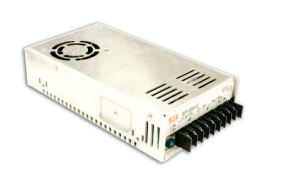
Power supplies primarily serve the purpose of AC to DC conversion and power flow control. In a PC, the power supply runs proper levels of power to different components in the system. In an LED system, the power supply takes 120V (or 240V) AC service and converts it to DC for the control components and LEDs to use. As little as 8 years ago, power supplies were built with this primary purpose in mind and had little-to-no safeties built into the system.

Current (quality) power supplies have several control factors and you should know what they are and how they work. If the manufacturer you're working with can't say their power supplies handle ALL of the features mentioned, you should be concerned as these are standard feature sets. Make them prove it...

Here are the standard features and what they mean:


SMPS Universal AC input / Full range
In a SMPS (switched-mode power supply) AC input is directly rectified and filtered to obtain DC voltage. Switched-mode power supplies are regulated to keep the output voltage constant. These employ a controller which monitors current drawn by the load. As power output requirement increases, the duty cycle increases thus ensuring the system has the power it requires.

Built-in active PFC function
Power Factor Correction (PFC). This is a somewhat complex system which could take pages to explain. Simply put active power factor correction consists of a number of capacitors which are switched by means of contactors. These contactors are controlled by a regulator that measures power factor in an electrical network. Depending on the load and power factor of the network, the power factor controller will switch the necessary blocks of capacitors in steps to make sure the power factor stays above a selected value. This keeps everything in the system even and regulates the power going through to the system, alleviating spikes/drops in power which could shorten the lifespan of your display.

Protections against Short circuit / Overload / Over voltage / Over temperature
Quality Power supplies often include safety features such as current limiting which protect the device from harm. In the event an abnormal high-current power draw is detected, the power supply recognizes this as a direct short and will shut itself down before damage is done. The same goes for excessive heat levels (which directly affect performance).

Forced air cooling by built-in DC Fan
Many power supplies are built with passive thermal management (perforated aluminum casing). Unfortunately this only serves low-end power systems. An LED display often requires significant power and can create high levels of heat (BTUs - British Thermal Units) which need to be mitigated within the system. 

Built-in fan speed control
Simply having a forced air cooling system isn't enough. The fans need to be managed with controls set to run at varying required speeds (from ) - 100%) when thermal sensors detect levels above a given threshold.  This ensures the system continues to operate optimally. As heat increases, a power supplies efficiency decreases and its output drops. Keeping the power supplies cool is incredibly important to ensuring the system performs at its best.

Fixed switching frequency at 100KHz
Resulting DC voltage is switched on and off at a high frequency by electronic switching circuitry.This produces an AC current which passes through a transformer or inductor. High frequency switching enables the use of  filter capacitors that are much smaller, lighter, and less expensive than pass-through systems (systems which use control chips to filter/convert power). After the inductor , the high frequency AC is rectified and filtered to produce the DC output voltage. If the SMPS uses an adequately insulated high-frequency transformer, the output will be electrically isolated from the mains; this feature is often essential for safety.

While this is a little drier than the regular articles posted, it's important to understand the heart of LED Display systems. A lot of manufacturers cut corners with the power supplies and they're hoping buyers won't know the difference. These seem like small, unimportant things (a power supply is a power supply, right?) but they have significant importance to the overall  lifetime optimal performance of your display. The more you know, the better you can source the best solution for your company and clients.

*I invite you to comment here and/or email me directly with requests at deacon@vantageled.com. Vantage LED has white paper resources and more educational material on the website (http://www.vantageled.com), please check it out when you have a moment. Note all posts/thoughts/writings are strictly the viewpoint of me and me alone and do not reflect nor speak for Vantage LED’s beliefs, attitudes, thoughts, etc. unless specifically stated.

Thursday, December 20, 2012

Simple LED Sign Repair

“Anything that can possibly go wrong, does, usually at the worst possible time.”

-         Murphy’s Law


Rocket scientists at NASA believe this as gospel while others dismiss it as extraneous folklore.  But what if it is true? It sure seems like events conspire to ensure that “no good deed goes unpunished!”

Combine the hyped-up and misconstrued prediction by the Mayans regarding the end of the world this month with Murphy’s Law and imagine this scenario:

Your toy store, “Santa’s Toy Wonderland”, is running the biggest sale of the year this Friday, December 21st, 2012 and last night your team unloaded a tractor-trailer full of hot toys that every parent in town is desperately searching for. You have toys ranging from battery-powered fire engines that kids can race up and down the sidewalk on to the latest Wii console.  Santa himself would be impressed!

Your graphic designers just uploaded the new animation for your two-sided, full-color, 10’ x 6’, LED sign. Last night you tested the content, and it “popped!” It looked great and now, right now, you just arrived in the parking lot at 5AM on Friday morning and there is no image on the LED sign.

What do you do? What can you do? Can you do anything? Well, if you’re the owner of the LED display you can call the owner of the sign company who sold you the LED sign and wake him up at 5AM and tell him you are declaring an “LED Emergency”- perhaps the first ever in the LED sign industry.

Here are a few simple things that the sign company owner knows to make his problem solving easier:

  • The controlling software and hardware engineering is pretty impressive but the actual problem troubleshooting is fairly straightforward.

  • Almost all problems are either: A/C power source, computer on/off, cables, power supplies, or controller cards (of some type depending on brand and model).

  • LED signs are a matrix of lamps that comprise modules, a matrix of modules that comprise cabinets and a matrix of cabinets that make up the complete LED sign.

Knowing this, do not panic, even if you are the rookie LED sign repair technician- stay calm!

Is the entire LED sign off? Quality LED signs incorporate a controlling computer that must stay on constantly to “talk” to the LED sign. Is it on? Perhaps an evil elf in your shipping department turned your LED sign off last night, to give you a heart attack at this very moment! Check the main power switch. If it’s off, turn it on and see if the LED sign comes back on. Also, make sure the sign itself has not tripped a circuit breaker (or multiple circuit breakers depending on how it is wired). If one side is off and one side is on, it’s possible that an individual circuit breaker may control each side of the LED sign and only one breaker has tripped.

Does one side of the LED display appear “on” and the other side “off” with no condition described thus far present? Could be that a data controller (one unique data controller per side) is bad, or the cable sending data from the card is bad.

Do you have only a block of multiple LED modules out on one side? If so, a power supply which feeds a group of these LED modules may have failed.

Or, do you have just a row of LED modules that are off or that share a common lighting problem? If so you may have a bad LED module at the first feed point for that row. An IC chip could be bad on that first LED module.

Some troubleshooting strategies that your licensed LED sign technician will employ to narrow the problem search down include checking cables and connections, swapping LED modules and replacing damaged components. They will be careful and safe, and will always use their safety harness when working high.

But as a toy store owner, what can you do? If you are not a skilled technician getting involved in the actual repair can be costly and dangerous. Do what you can without getting hurt or making it worse:

·         Check your content scheduler. Has your ad expired? Perhaps it was scheduled to run just one day. If your scheduler doesn’t show current ads, expired ads, and ads currently playing you are missing out on a great feature! 

·         As previously stated, check for physical power interruptions to the LED display and also ensure that the software has not dimmed your display to zero nits. The LED display can be on but dimmed down to zero brightness.

·         Make that call to the installing sign company. During peak business times every hour that LED display is down is lost sales revenue. Call them right now.

Quality LED signs have surge suppression engineered into the product. If not, surge suppression should be added to the building’s electrical system. What this does is to “bleed off:” excessive voltage and current. Usually the culprit that damages sensitive electronics is over-current. When the power goes off and then comes back on, the voltage is low, and because Ohm’s law insists, the current is high. High current can damage electronics if a surge suppressor is not incorporated into the installation.

With LED signs, as with all electronics, lightning can be devastating. This is why every sign must be grounded to an earth ground (copper stake driven 6 feet into the ground). This may cause the lightning to follow the path of least resistance to the earth. Maybe this saves the LED display, maybe it does not.

Every LED display needs to be covered under the general liability insurance policy of the business to avoid catastrophic scenarios like fire and lightning.

Hopefully you, working with your local sign company and a supportive US manufacturer can get the LED sign back up and running to cause a stampede through your front door by noon! Not all sign companies are alike and not all signs are alike. Some seem to demand constant repair attention, while others run for years without service issues. Do your homework before buying and select wisely to make your purchase an “investment” rather than a “basket on the top of a pole” that you throw dollars into.

Remember that Murphy’s Law is a myth and the Mayan’s were speaking of the old calendar running out of pages. I hope.

Merry Christmas!


- Mike Prongue (with technical assistance from James Anderson)


**All posts, thoughts and writings are strictly the viewpoint of me and me alone and do not reflect nor speak for Vantage LED’s beliefs, attitudes, thoughts, etc. unless specifically stated.




Tuesday, December 11, 2012

LED Signs- Be a Good Neighbor!

One of the greatest victories you can gain over someone is to beat him at politeness.

-          Josh Billings

  Rudeness is the weak man's imitation of strength

-          Eric Hoffer


In my lifetime, the population of the United States has almost doubled! That’s twice as many people living on the same block, twice as many people on the Florida highways, twice as many people breathing what used to be “my” air, and the once empty beaches now clearly reflect this population increase. This change happened slowly over the last 50 years plus, and adaptation, lowered expectations and patience on my part has been required to deal with this. As much as I hate to admit it, I’ve had to change.

The rapid explosion seen in the digital LED sign industry is requiring change also. Call them Electronic Message Centers, or LED Displays, or Outdoor Electronic Signs or whatever you want, but they are still a new technology and not everyone is moving at the light speed of the industry. What can be done to help automobile drivers, business owners, and the Sign dealers live with one another and allow the full potential of the outdoor digital media industry to be realized?

I think that Judith Martin “Miss Manners”, the icon of American etiquette, would be proud to know that her ideology would go a long way- be nice, play fair and be gracious. Here are a few tactical ideas that can sign users can employ to be a Good Neighbor:

1)  BRIGHTNESS…  An LED sign is not a lighthouse. A lighthouse sits on the coastline and emits an extremely bright light to guide ships. An LED sign should be an information center not a blinding beacon. Yet, on any road, in any city of America that allows LED signs, there is at least one LED sign that is too bright. This over-drives components shortening their functional lifetime, requires excessive energy use and therefore a higher operating cost, annoys drivers, and labels the business as a negative member of the community. Each “LED BEACON” puts another dent in the reputation of the LED industry.

What to do? One answer is to install a very common light sensing device on the sign and allow the attenuation to occur automatically. But, this is not always the most reliable method. Most software control systems allow for the scheduling of brightness levels. Program the time and the desired brightness level into the scheduler and “let it roll”. This makes it simple and controllable. Select the time the sign dims and then select the time the sign brightens using the controller software program. 
 
Remember if you think it's "too much" it usually is!


2)  CONTENT…  Appropriate content is vital. A $50,000 LED display can be reduced to the effectiveness of a reader board with the wrong choice of colors, the wrong content, too much motion and an overly complex message. Look at the time the driver actually has to view any message and the imperative “keep it simple” becomes critical in the design of the message. Do not allow your well-intentioned business owner to sabotage their advertising efforts by “showing off” with a psychedelic light show (for example). The goal of an LED sign is not for it to compete with the “burning man” event for attention (for example).


Cost-effective, professional content providers exist that can deliver excellent, and appropriate advertising slides and animation. Unless your customer has a professional designer on staff, they should consider using one of these services.

On the subject of slide duration timing- not too fast! The absolute quickest time is 6 seconds, many users time their slides to 10 seconds.


On the receiving end of the LED message, the driver does not want to experience a cornea-burning, cerebrum-stinging advertising message each time they drive by the offending location. This may not drive as many new customers into the business as the well-intentioned business owner anticipated! Being subtle with rich colors, simple text, and well planned message is the best way to manage an LED sign.


3)  QUIET TIMES…   “In six days the Lord made the heavens and the earth…” goes the creation message, but on the seventh day even he rested. If this is the case, why does every LED sign have to run 24 hours a day, 7 days a week, 52 weeks per year?

An “essential LED sign” is one that is used for traffic control, government use, transportation information or emergency messaging. Most of the others have times when they could be dimmed to zero nits with very little loss of advertising exposure. This would probably never happen on a commercial billboard of course, but on the “Frank’s Hot Dogs” LED sign, why not turn it off from midnight until  the morning drive time? The traffic counts may drop to a near-zero after midnight so why waste electricity?

There are two ways to turn off an LED sign using software controls. The 1st way is by allowing the software to literally power down the LED display thus requiring a cold start reboot of the LED sign and the controlling computer. In cold weather, sometime the boot time creates issues for the customer as they see extraneous output on their LED sign during the boot. Also, the actual cold weather time required from boot to normal functioning may be longer than the customer desires.

The 2nd and preferred method to turn off an LED display is to simply allow the software to dim the screen to zero nit intensity. This keeps the LED sign powered-up and the computer on-line and does not require the cold start re-boot.

As the LED sign industry evolves, customs and practices will become more defined and formalized. For today, it’s simple- be a good neighbor and remember that an LED sign is just a very effective way to advertise and share information when used properly.

- Mike Prongue

** Note all posts/thoughts/writings are strictly the viewpoint of me and me alone and do not reflect nor speak for Vantage LED’s beliefs, attitudes, thoughts, etc. unless specifically stated.